
Commercial Energy Storage ROI in Europe (2026)
Real Payback Analysis with Data
Across Europe, the economics of solar-only systems are undergoing a structural shift. Negative electricity prices, stricter grid export limitations, and increasing volatility in wholesale power markets are reducing the predictability of solar revenues.
According to industry research from organizations such as the International Energy Agency (IEA) and Fraunhofer ISE, curtailment events and price fluctuations are becoming more frequent in markets such as Germany, the Netherlands, Spain, and Italy.
In this environment, exporting surplus solar energy to the grid is no longer a reliable value strategy. Energy must be managed, not simply generated.
Commercial Energy Storage ROI in Europe (2026)
The return on investment for commercial energy storage systems varies across Europe based on electricity price structure, consumption profile, and regulatory conditions.
Typical payback periods for commercial and industrial energy storage systems are as follows:
- Germany: 3.5 – 6 years
- Netherlands: 4 – 7 years
- Italy: 3 – 5 years
- Spain: 3 – 5.5 years
In markets where demand response programs or capacity markets are accessible, payback periods can be further reduced by 0.5 to 1.5 years depending on system utilization.
Higher electricity price volatility and wider peak-to-off-peak spreads generally result in stronger ROI performance.
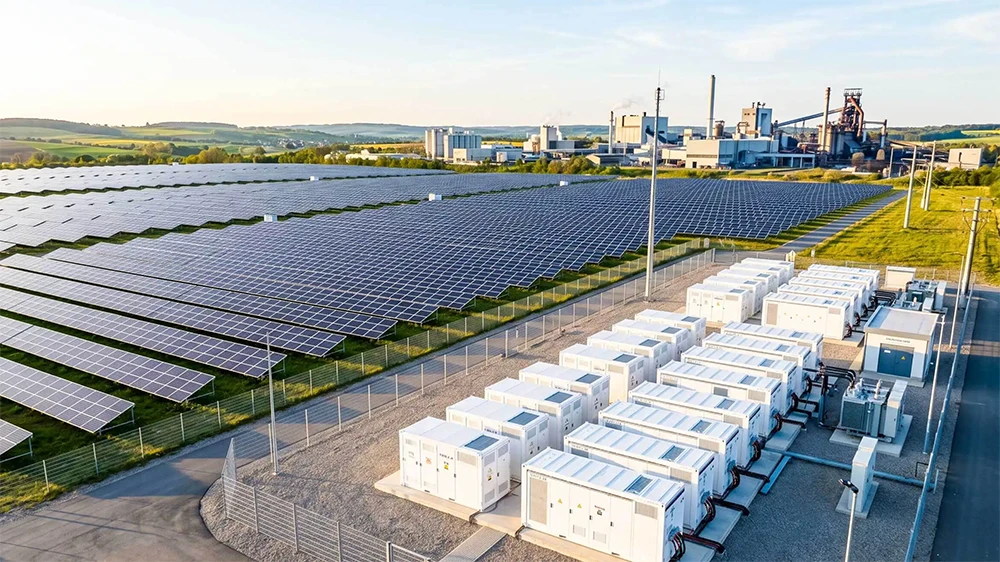
How Commercial Energy Storage Generates Economic Value
Commercial and industrial battery energy storage systems generate financial returns through multiple mechanisms:
1. Peak Shaving (Demand Charge Reduction)
Energy storage systems reduce peak demand by discharging during high-load periods. This lowers contracted capacity requirements and reduces demand-based electricity charges. In commercial applications, peak shaving typically contributes 40–60% of total system savings.
2. Energy Arbitrage (Time-of-Use Optimization)
Battery systems charge during low-price periods and discharge during high-price periods under time-of-use electricity pricing structures. This mechanism is particularly effective in European markets with high intraday price volatility. Energy arbitrage generally contributes 20–35% of total ROI.
3. Solar Self-Consumption Optimization
Instead of exporting surplus photovoltaic generation at low or negative prices, energy is stored and consumed later when electricity prices are higher. This increases the effective utilization rate of renewable generation assets and improves overall system economics. This typically accounts for 15–30% of total ROI.
4. Grid Services and Demand Response (Optional Revenue Streams)
In selected European markets, commercial storage systems can participate in grid stabilization services, including frequency regulation and demand response programs. These mechanisms provide additional revenue streams beyond direct energy cost savings, depending on regulatory access.