
Battery Energy Storage Systems
The importance of battery storage systems for climate neutrality
Battery storage systems play a key role in achieving climate neutrality, as they enable the integration of renewable energy into electricity grids and are thus increasingly replacing fossil fuels.
- Battery storage systems buffer fluctuations in power generation from renewable sources such as wind and solar energy.
- They ensure grid stability by absorbing surplus electricity and feeding it back into the grid when needed.
- This allows energy generation to be better aligned with demand – a crucial step towards decarbonisation.

Contribution to the reduction of greenhouse gas emissions
- Battery storage enables renewable energy to be used more efficiently and helps to relieve the strain on the electricity grid.
- They reduce the need for fossil fuel-fired reserve power stations.
- In the long term, they help to drastically reduce CO₂ emissions and ensure security of supply within a carbon-neutral energy system.
Technical types and developments
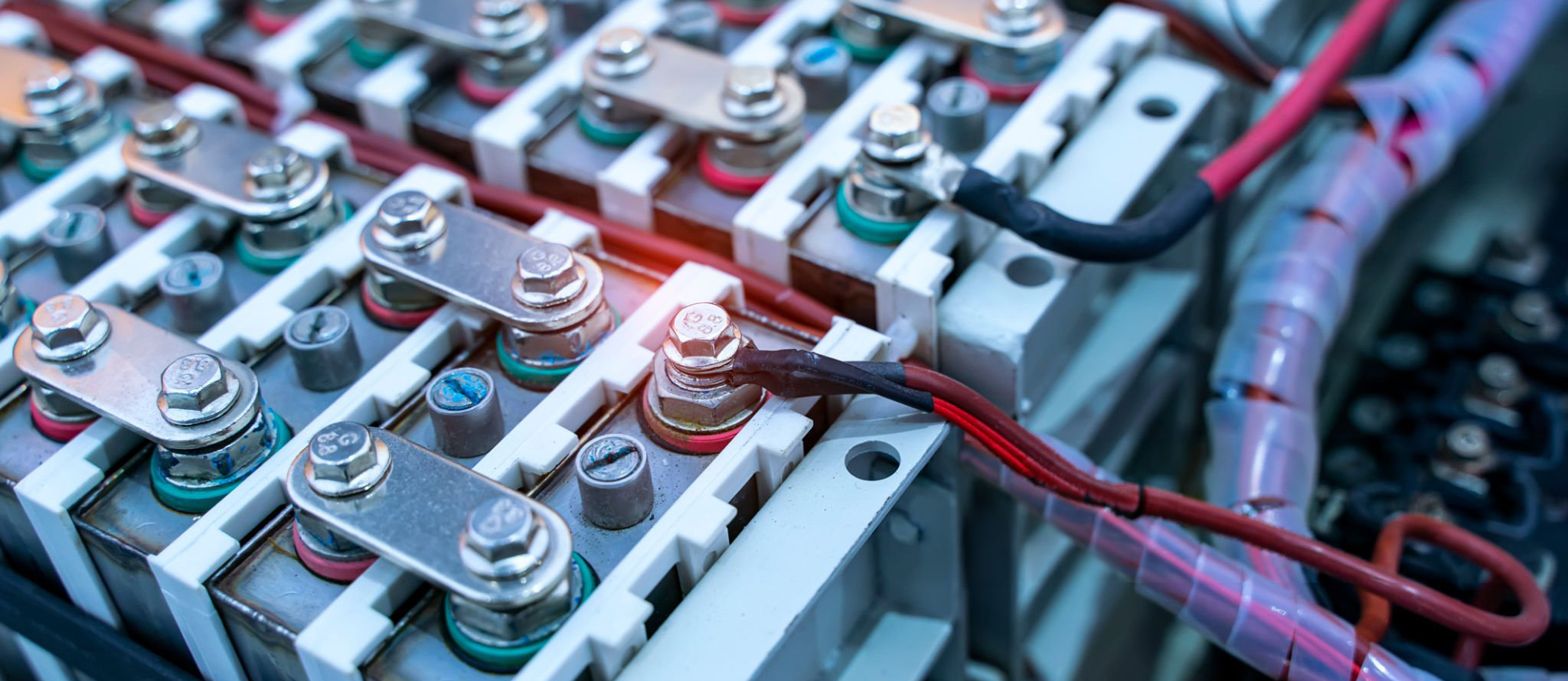
Lithium-ion battery
- Currently the dominant technology thanks to its high energy density and efficiency (≈ 90–95 %).
- Ideal for short-term storage.
New storage technologies
- Solid-state batteries: enhanced safety, longer service life.
- Redox flow batteries: scalable for long-term storage (up to several days).
- Research into sustainable raw materials to alleviate pressure on critical supply chains.
Sustainability and environmental challenges
- The manufacture of batteries still generates CO₂ emissions and environmental impact today due to the extraction of raw materials (lithium, cobalt, nickel).
- Approaches to the circular economy:
- Reuse of used batteries in stationary storage systems (‘second life’).
- Recycling of valuable metals.
- Green production processes (use of green electricity in Gigafactories).
Future role and framework conditions
- Battery storage systems are a key and indispensable component of the transition to a climate-neutral energy system in Germany by 2045.
- Regulatory measures:
- Support for energy storage projects through the Renewable Energy Sources Act (EEG) and climate protection programmes.
- Integration into the EU Emissions Trading Scheme.
- It is also becoming increasingly important in developing countries for decentralised, sustainable energy supply.

Conclusion
Battery storage systems are essential for the energy transition:
- They enable the full use of renewable energy,
- ensure a reliable supply when feed-in fluctuates,
- and significantly reduce greenhouse gas emissions.
They are therefore a key component of a climate-neutral future – but sustainable production, recycling and new technologies remain crucial to realising their full potential.